

Vladivostok, Russia
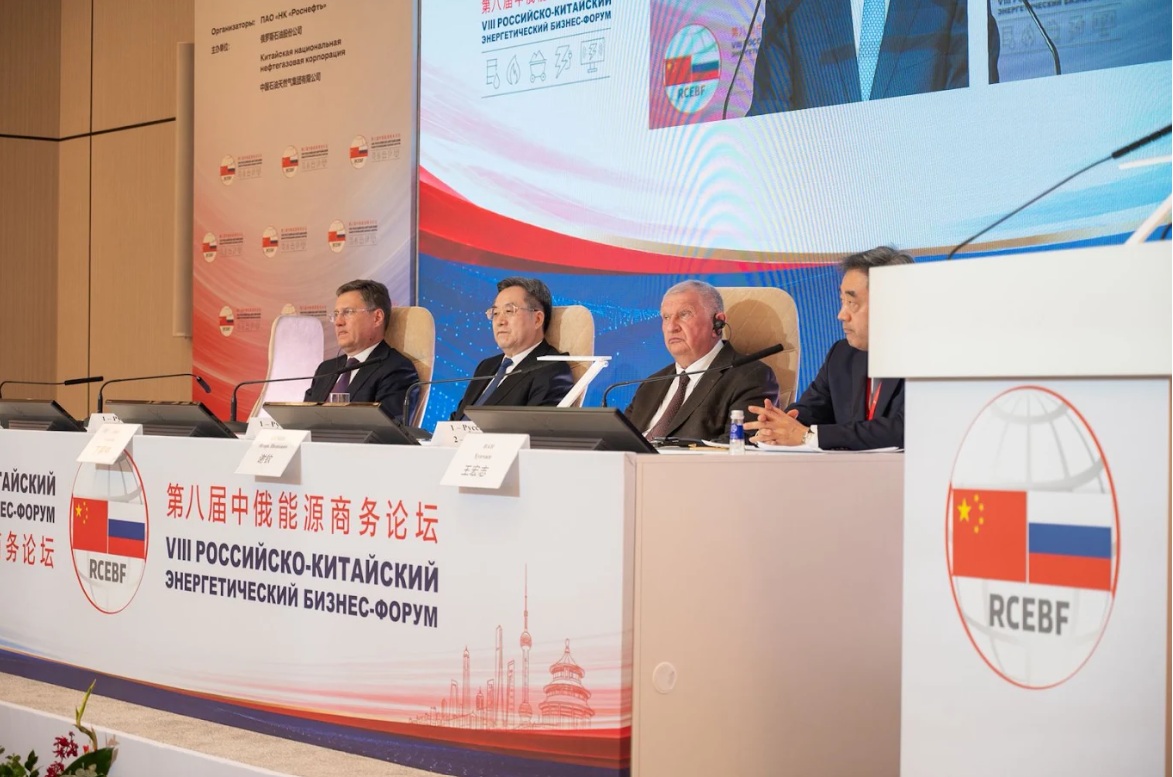
Asia’s growing industrial capacity, energy demand and investment in infrastructure are reshaping global energy markets, with China emerging as a major centre of global energy consumption and production, while Russia remains a key energy supplier and technology partner, Igor Sechin, Chief Executive Officer of Rosneft, said in his address at the VIII Russian-Chinese Energy Business Forum in Vladivostok.
 |
Asia’s Energy Rise Reshapes Global Markets as Russia and China Deepen Cooperation
Sechin outlined the changing global energy landscape, highlighting Asia’s growing role, Russia-China energy cooperation and new risks facing energy markets amid geopolitical tensions, disruption of established trade rules and rapid technological transformation.
Asia’s Growing Energy Weight
Trade turnover between Russia and China increased by 26% in the first seven months of 2026 compared with the same period last year. Russian energy resources account for more than 60% of Russia’s exports to China, while Russia remains China’s largest energy supplier, with a 22% share.
Russia has been China’s largest crude oil supplier for four consecutive years, with annual deliveries exceeding 100 million tonnes. Deliveries reached 67 million tonnes in the first seven months of 2026, while Russia’s share of China’s oil imports rose to a record 23%.
According to an estimate presented by Sechin, the economic benefit to China from the greater efficiency of purchasing Russian oil compared with Middle Eastern alternatives has amounted to $27 billion since 2022.
Russia is also China’s largest gas supplier. By the end of 2025, Russian gas accounted for almost 30% of China’s natural gas imports, including 47% of pipeline gas imports and 14% of LNG imports.
China’s Industrial Scale Drives Energy Demand
Sechin noted that China accounts for around 30% of global industrial production, almost twice the combined share of the United States and the European Union. China also accounts for 54% of global steel production, 85–90% of rare earth metal processing and more than 70% of renewable energy equipment manufacturing capacity.
China’s electricity consumption exceeded 10 trillion kWh last year, while installed generation capacity surpassed 4,000 GW, with more than 500 GW added in a single year.
Traditional energy remains important. China commissioned 78 GW of coal-fired generation last year, while new projects exceed 160 GW. According to the forecast cited by Sechin, coal will account for around 40% of China’s electricity consumption over the next decade. Russia supplies around 20% of China’s coal imports, delivering approximately 90 million tonnes last year.
Nuclear Energy and Electrification
China is implementing the world’s largest nuclear energy development programme, with 64 operating reactors and another 37 under construction.
Russia-China cooperation includes four power units at the Tianwan Nuclear Power Plant built with Russian participation, as well as new units at Tianwan and the Xudapu Nuclear Power Plant equipped with Russian reactors. Each plant is being equipped with two 1,200 MW units.
Russia also participated in the construction of China’s CFR-600 fast-neutron demonstration reactor and supplies up to 90% of China’s enriched uranium purchases. These supplies increased by 40% in 2025.
China’s renewable generation increased tenfold between 2015 and 2025, reaching 25% of total generation last year, with a target of 30% by 2030. China commissioned 162 GWh of new battery energy storage capacity in 2025 – around half the global total and 3.5 times the US figure.
Sechin also highlighted the growing link between energy and computing capacity and the rapid electrification of transport. Electricity sales through public charging infrastructure increased by more than 60% year-on-year in May 2026. According to the assessment presented by Sechin, electrification has reduced demand for motor fuel by 1 million barrels per day.
Energy Security and Alternative Routes
Sechin identified critical minerals and logistics as increasingly important elements of energy security. Around 90% of global rare earth processing capacity is concentrated in China, while Russia holds 10% of global reserves of these metals.
Russia doubled its supplies of copper concentrate and copper to China last year, while deliveries of copper ore and concentrate also doubled in the first seven months of 2026.
China’s strategic oil reserves are currently estimated at 1.4 billion barrels. Between February and June 2026, China reduced its oil imports by 5.5 million barrels per day. According to the estimate cited by Sechin, without these measures, oil prices could have been another $30 per barrel higher.
The Hormuz crisis highlighted vulnerabilities in global energy supply chains and the importance of alternative routes. The Northern Sea Route can reduce delivery times by 1.5–2 times and cut costs by one-third. Through the special relationship between Russia and China, China has the opportunity to obtain priority access to the route.
Strategic Partnership
Russia-China energy cooperation now spans oil, gas and coal, nuclear energy, renewables, energy storage and electricity grids, critical metals, transport electrification and alternative logistics. Bilateral settlements are now conducted almost entirely in rubles and yuan.
Against the backdrop of tariff wars, US dollar volatility, rising government debt in Western countries and the erosion of the international legal system, Sechin stressed the importance of risk management, trust, complementarity and continued cooperation.
“One string cannot make a melody; one tree cannot make a forest,” Sechin said, quoting a Chinese proverb.
Sechin stressed that the conditions for further development of the strategic partnership between Russia and China have been created and that both countries should maintain and strengthen them.
“We must win this race. The fate of our peoples depends on its outcome. As they say in China, ‘the eastern wind prevails over the western wind,’” Sechin said.